Case studies
December 12, 2024
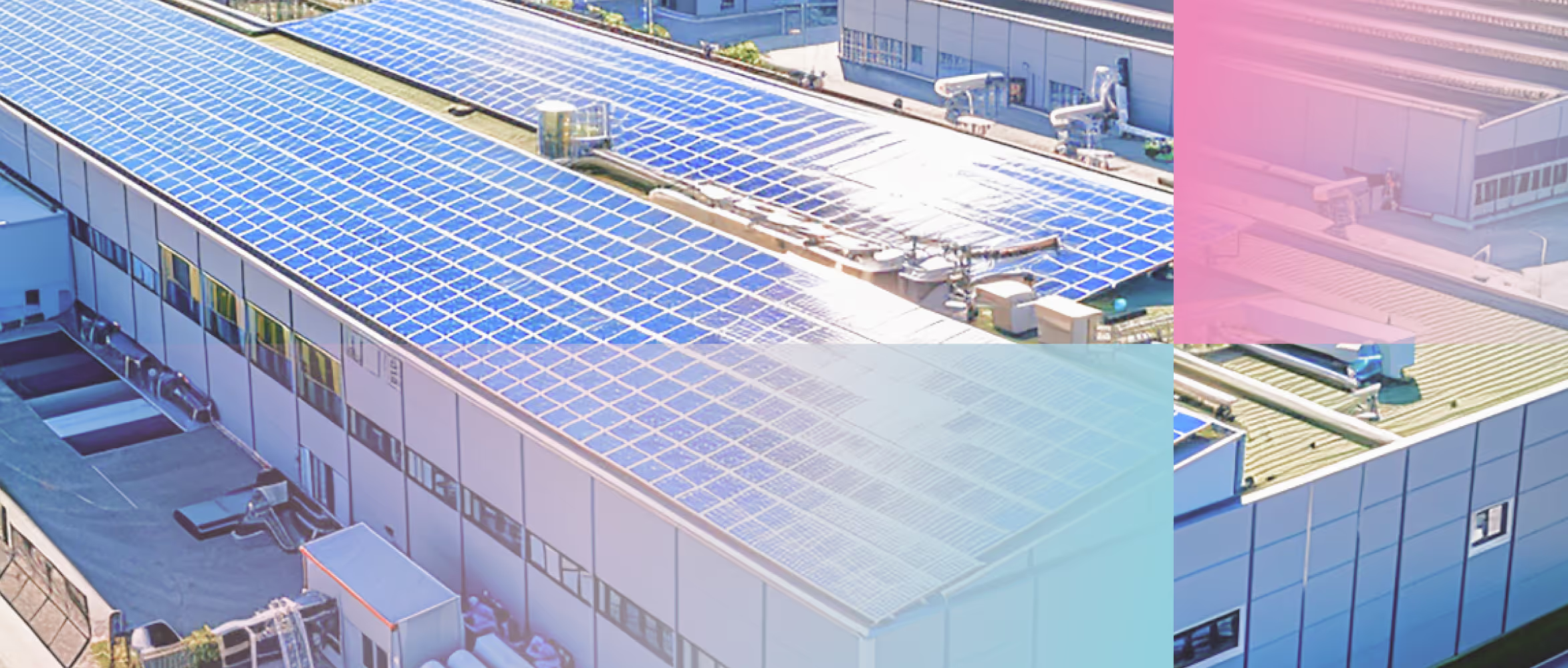
Scaling solar adoption across 1,500+ industrial properties
December 12, 2024
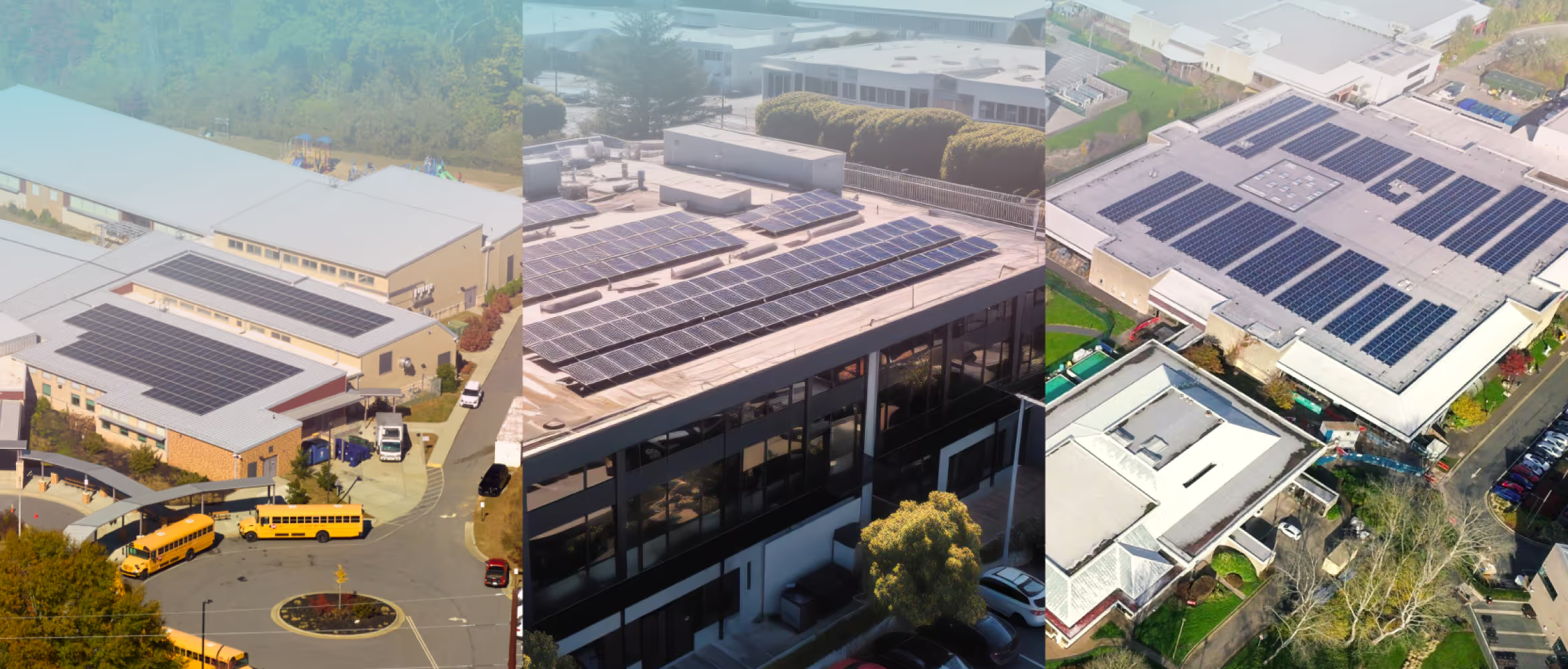
Portfolio-wide solar feasibility for 1400+ properties
December 12, 2024
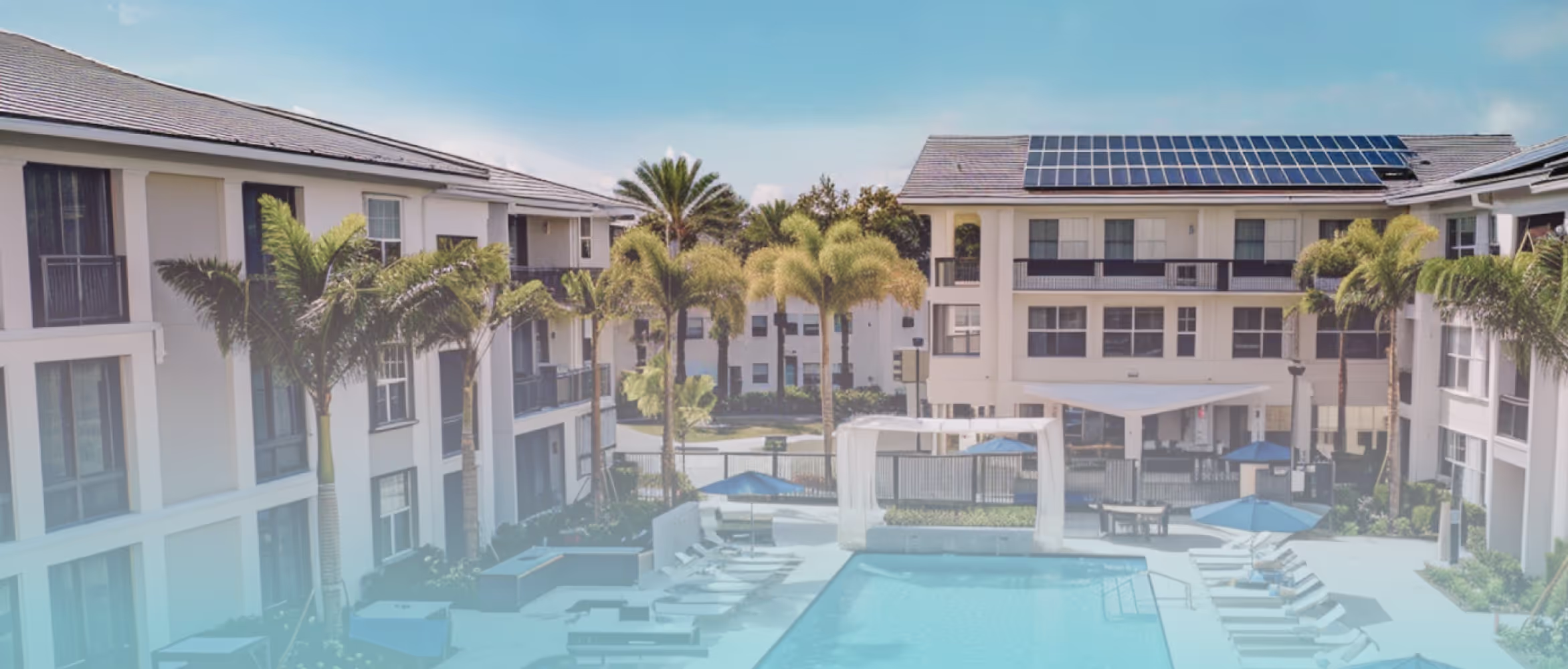
Optimal system design + 50% cost savings for development property





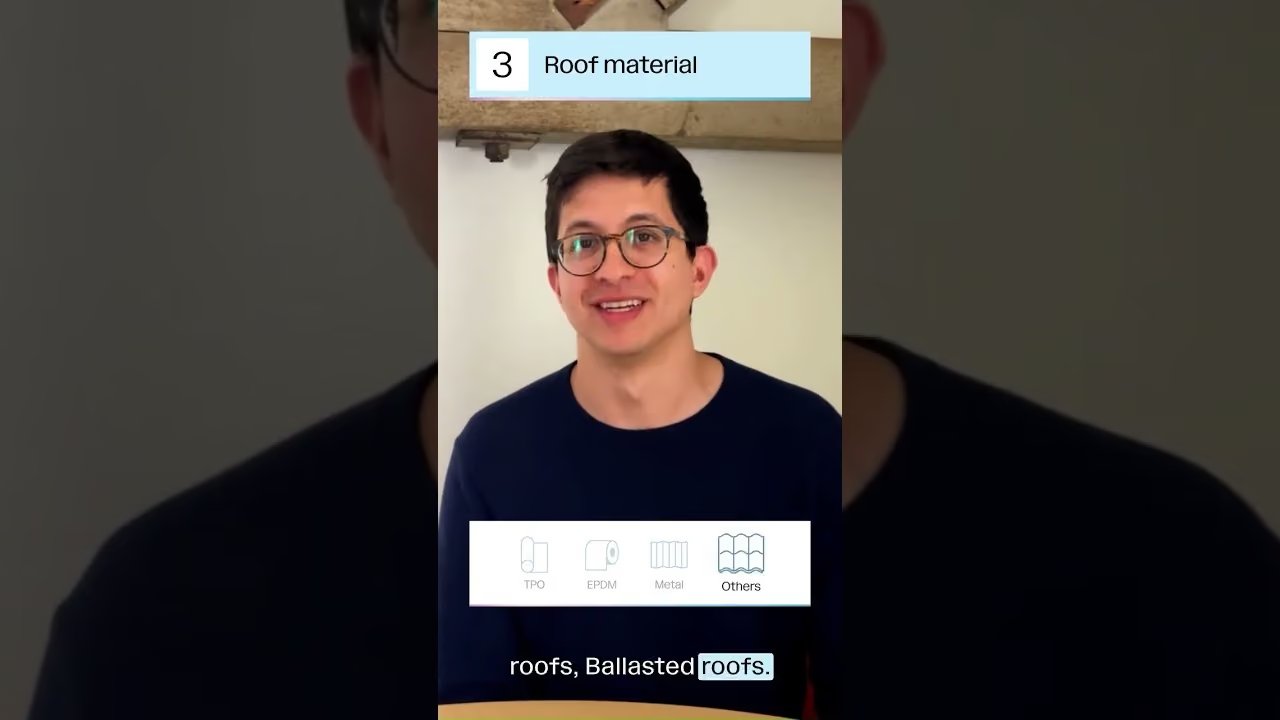
Here's the thing: age isn't the dealbreaker, condition is. A well-kept 15-year-old roof beats a neglected 5-year-old one every time. And weight is rarely an issue either, modern systems add just 3-5 lbs/sq ft, about an inch of snow. Your roof already handles far more. Got a re-roof on the horizon? Even better. Pair it with solar and the rental income can help cover the cost. Worried about your warranty? Done right, it stays fully intact. So the question was never "is my roof a good fit for solar?" It's "do the numbers actually work?" That's exactly what we underwrite, roof by roof. 🔆 Talk to an expert at lumen.energy
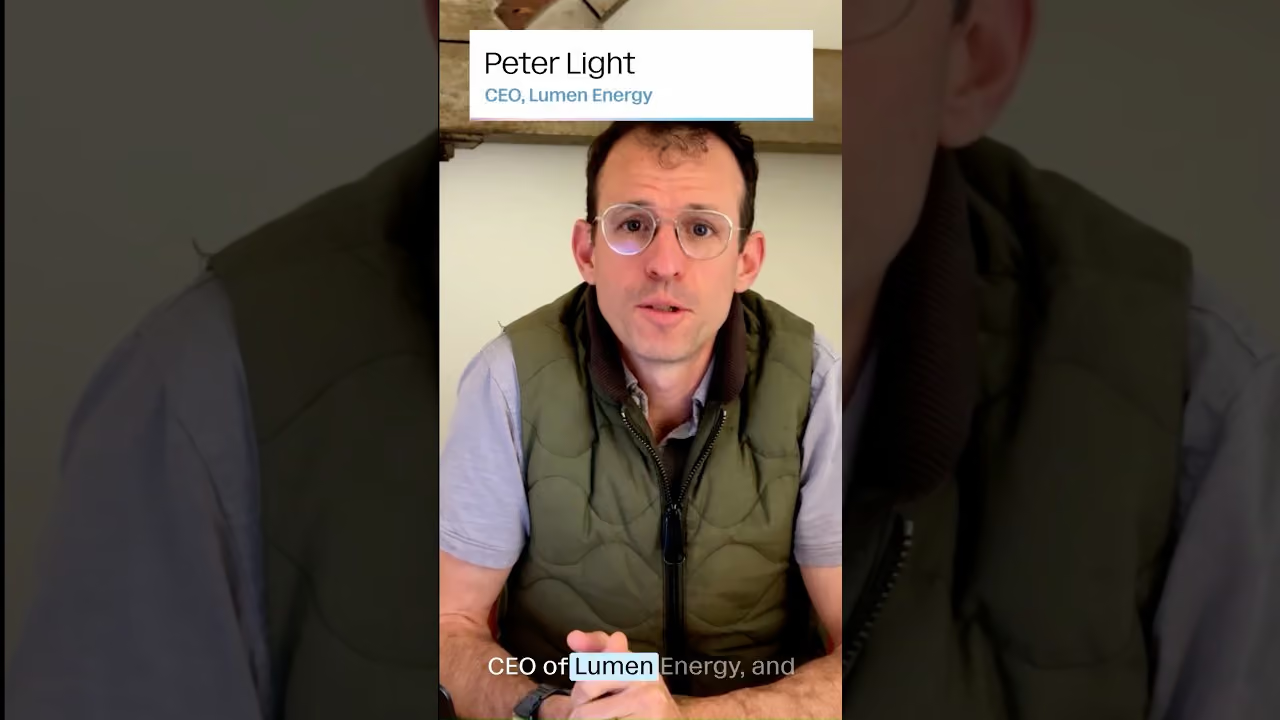
Our CEO breaks it down in this #LumenLesson: 1. Lead with alignment, not permissions 2. Make the tenant benefit clear up front 3. Show the data that solar is already commonplace across CRE (we can help you prove it) Read the blog post here: https://www.getlumen.com/resources/how-to-communicate-solar-plans-to-your-tenants-and-when-you-can-move-forward-without-them
Wondering whether your lender will sign off on a rooftop solar lease? Most will. This video covers what commercial mortgage lenders actually scrutinize in a commercial solar lease — the SNDA (subordination, non-disturbance, and attornment agreement), roof integrity and warranty impact, and lease term length against your loan. You'll also get the four moves that keep a deal from stalling: clean documentation, investment-grade financial analysis, early disclosure of planned refinancing, and working with counsel who's negotiated solar leases before. Zero CapEx. Long-term revenue from underused roof space.



In the latest episode of The Pulse by GRESB, host Reid Morgan sits down with Peter Light, CEO & Co-founder of Lumen Energy, to break down the economic and operational realities of deploying on-site renewables across large commercial property portfolios.





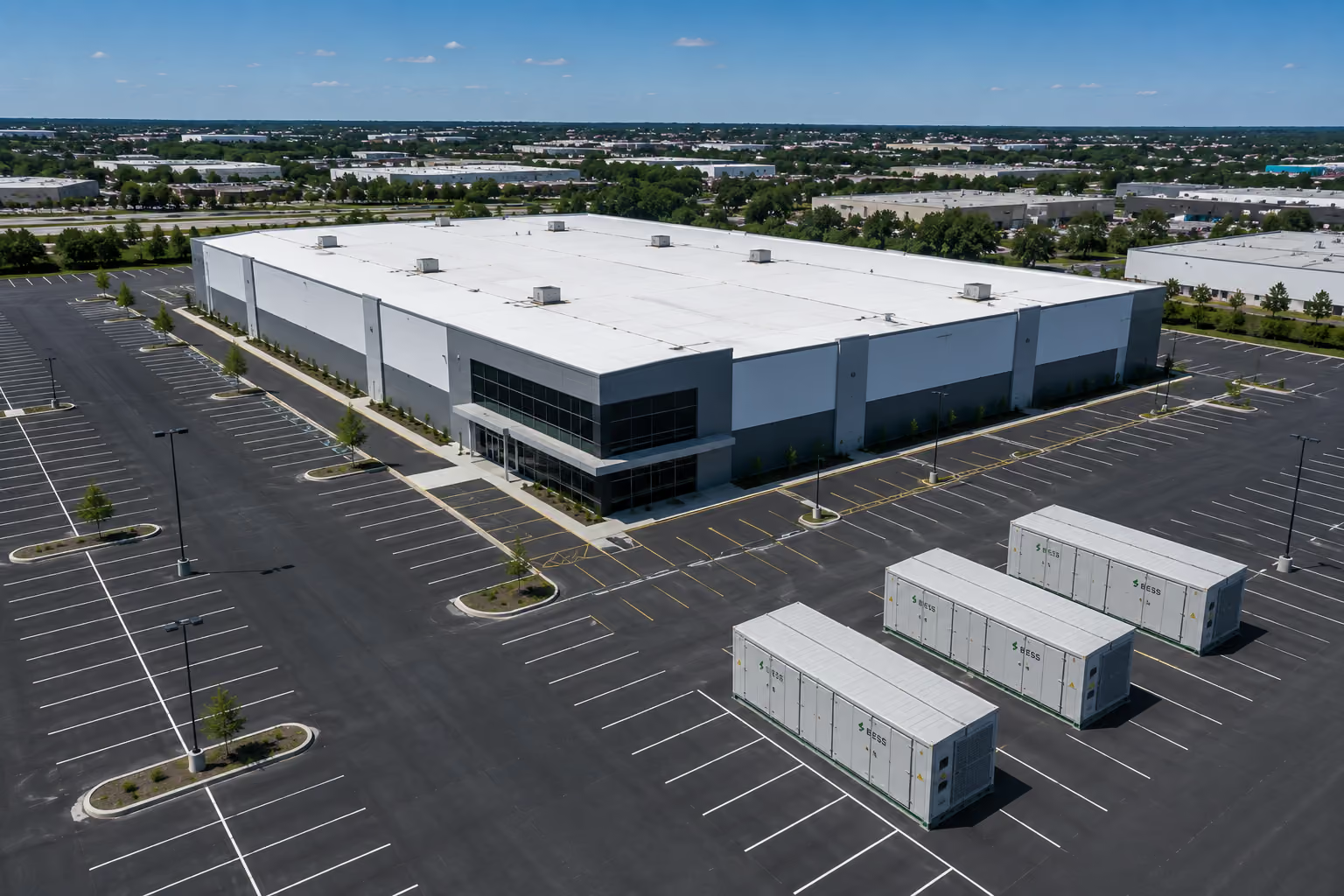
If you own commercial or industrial property in ComEd territory, an underused corner of your land may be one of the most valuable assets on your balance sheet right now. Here's what's happening, what it pays, and how to find out whether your sites qualify.
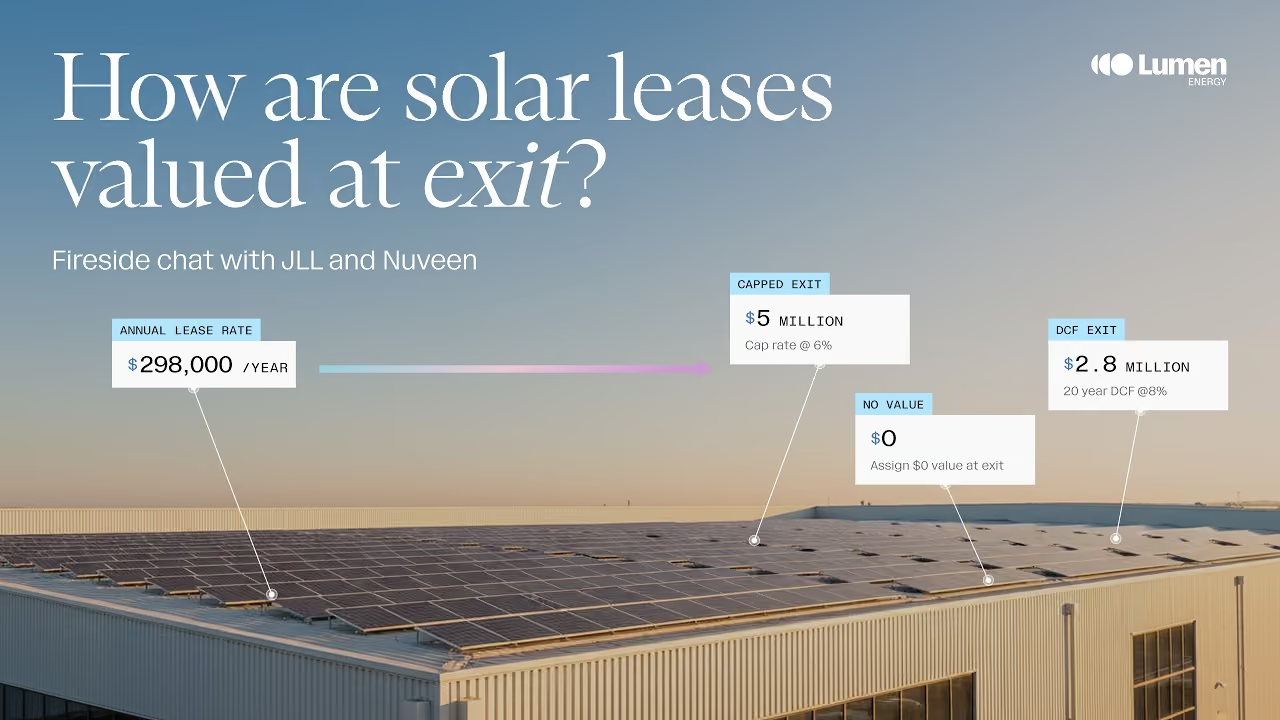
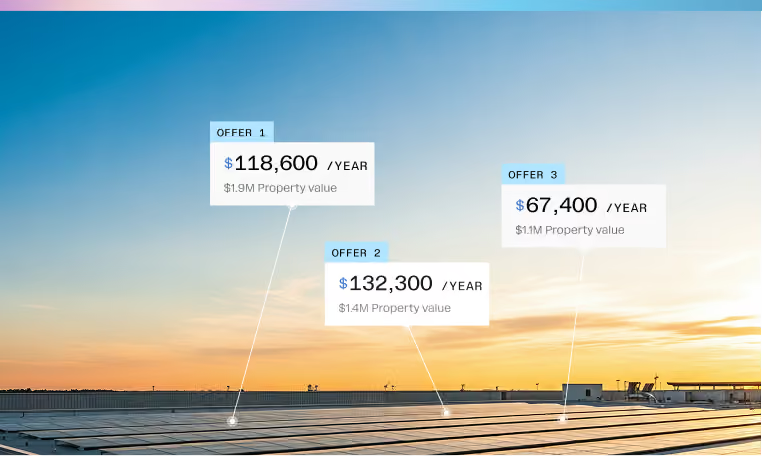
Drawing on over 1,849 live bids, the inaugural Lumen Solar Index gives commercial real estate owners the market data they’ve never had access to — until now.
.avif)
Our inaugural quarterly benchmark tracks what commercial rooftop solar is actually worth — in $/ft²/yr across NJ, MA, MD, and IL — so owners and capital partners have a number to point to.
Jared Friesen, Lumen's very own solar engineer, gets into the nitty gritty about how solar is installed on your rooftop. Interestingly, solar doesn't always require new holes in your roof. See how different construction approaches ensure the integrity of your rooftop.
.avif)
Learn how commercial solar installations protect your roof and what happens if issues arise. Expert guidance for real estate owners considering rooftop leasing.
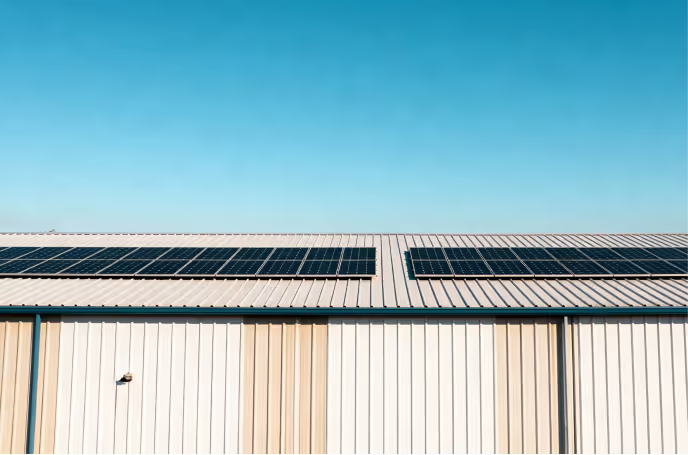
If you're a commercial real estate owner considering rooftop leasing for solar, insurance is one of those practical questions that deserves a clear answer. The short version? Solar installations typically have minimal impact on your insurance premiums—and with the right structure, they shouldn't increase your risk at all.
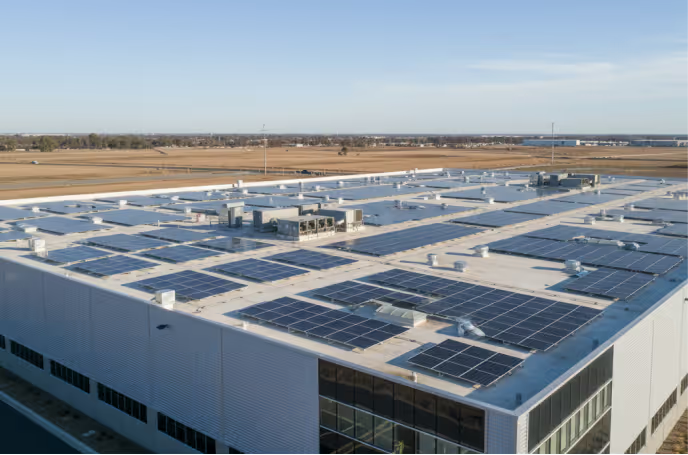
Can your commercial rooftops support solar installations? Whether you're managing foam roofs, industrial facilities, or aging structures, understanding roof compatibility is essential for turning underutilized rooftops into predictable revenue streams.
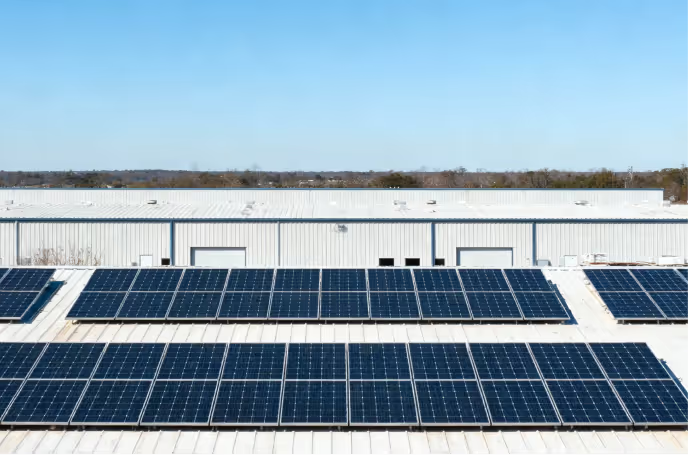
If you're exploring rooftop leasing opportunities for your commercial real estate portfolio, one of the first questions you'll ask is: How much roof space do I actually need? The answer depends on the type of solar project, the market you're in, and what developers are looking for—but we can give you clear benchmarks to work with.
.avif)
When commercial real estate owners solicit bids for onsite solar, one of the first surprises is how widely pricing can vary for the same building.Across hundreds of transactions, we consistently see developers submit offers that differ by multiples, not margins. In one recent Maryland example, annual lease proposals ranged from $180,000 to $284,000. That $104,000 gap in year one alone adds up to more than $2 million over the life of the lease.The takeaway is simple: a single developer quote is one opinion, but a competitive process is what reveals the true market value of solar on your building’s roof.
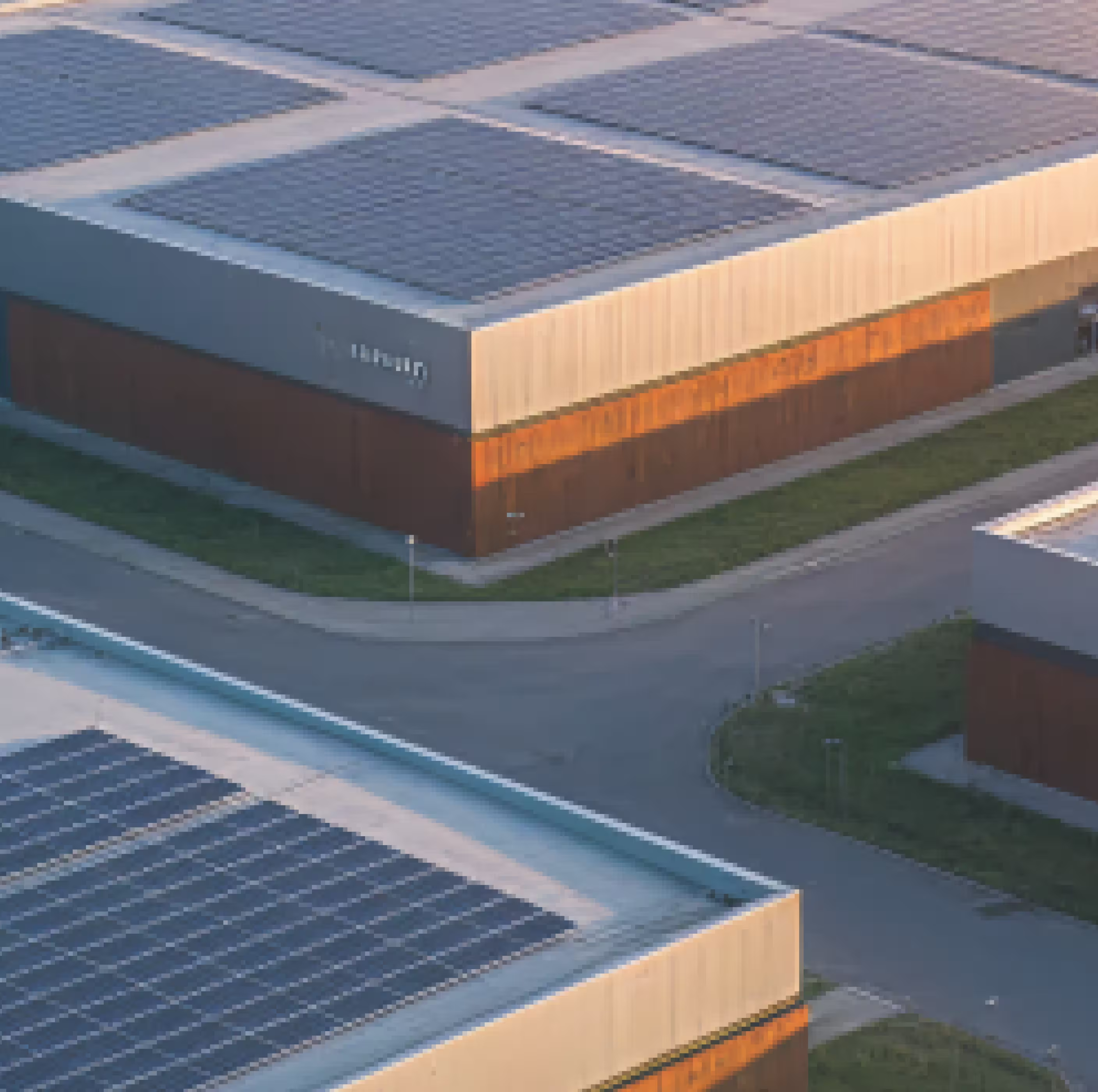
Should you replace your roof before going solar? How does roof condition impact your solar project timeline and returns? If you're a commercial real estate owner evaluating rooftop leasing opportunities, these questions matter—and the answers can significantly impact your project economics and NOI.
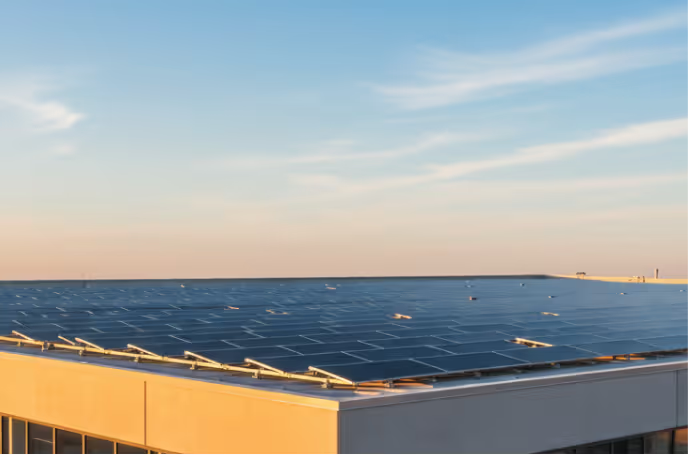
Learn when and how to communicate rooftop solar plans to your tenants. Expert guidance for commercial real estate owners on tenant engagement, lease requirements, and moving forward efficiently.
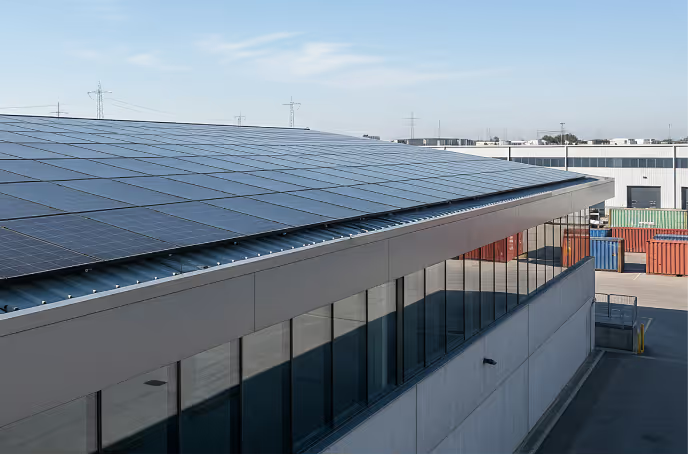
Understand how rooftop solar leases impact commercial real estate financing and refinancing. Learn what lenders consider and how to navigate mortgage requirements with solar on your properties.
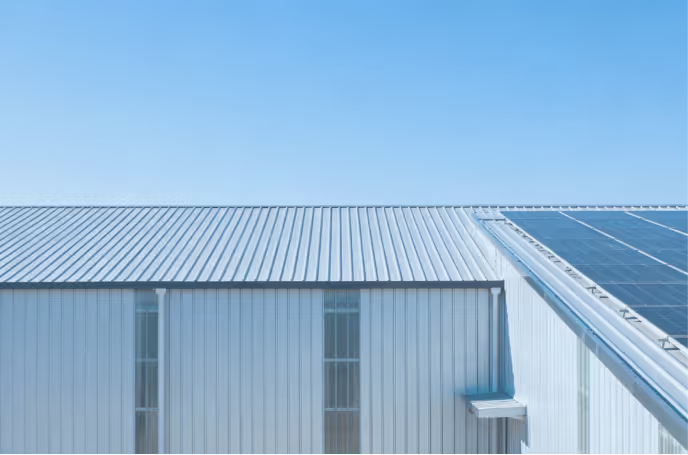
Making the right solar decision for your commercial real estate portfolio starts with understanding two distinct approaches: Behind-the-Meter solar and Front-of-the-Meter solar. While both generate clean energy, the way in which economic value is captured differs and ultimately serves different strategic goals. Below is a practical breakdown for asset managers deciding which approach fits their portfolio.
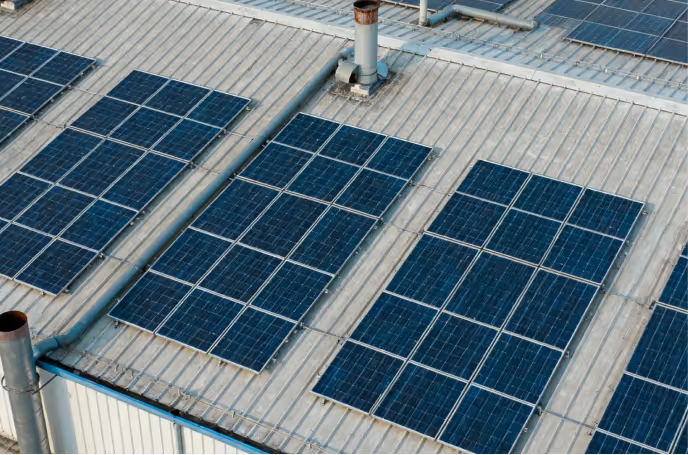
Learn how community solar subscriptions work for building owners and tenants. Discover the primary financial benefits of rooftop leasing and optional energy savings opportunities.
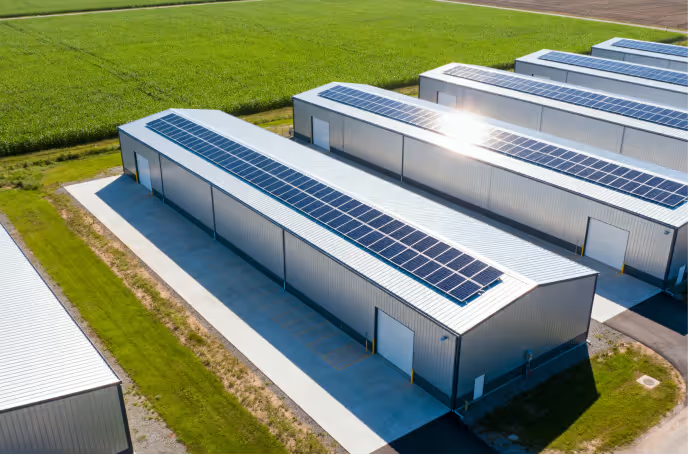
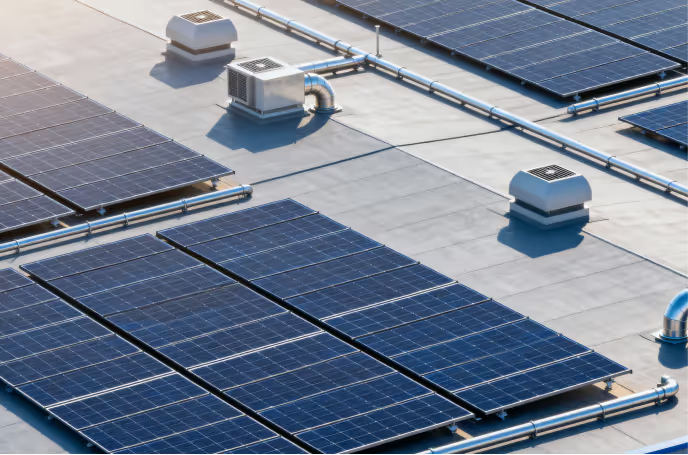
Learn what physical changes solar installations make to commercial roofs, how modern mounting systems work, and how Lumen Energy ensures safety and compliance throughout your rooftop leasing project.
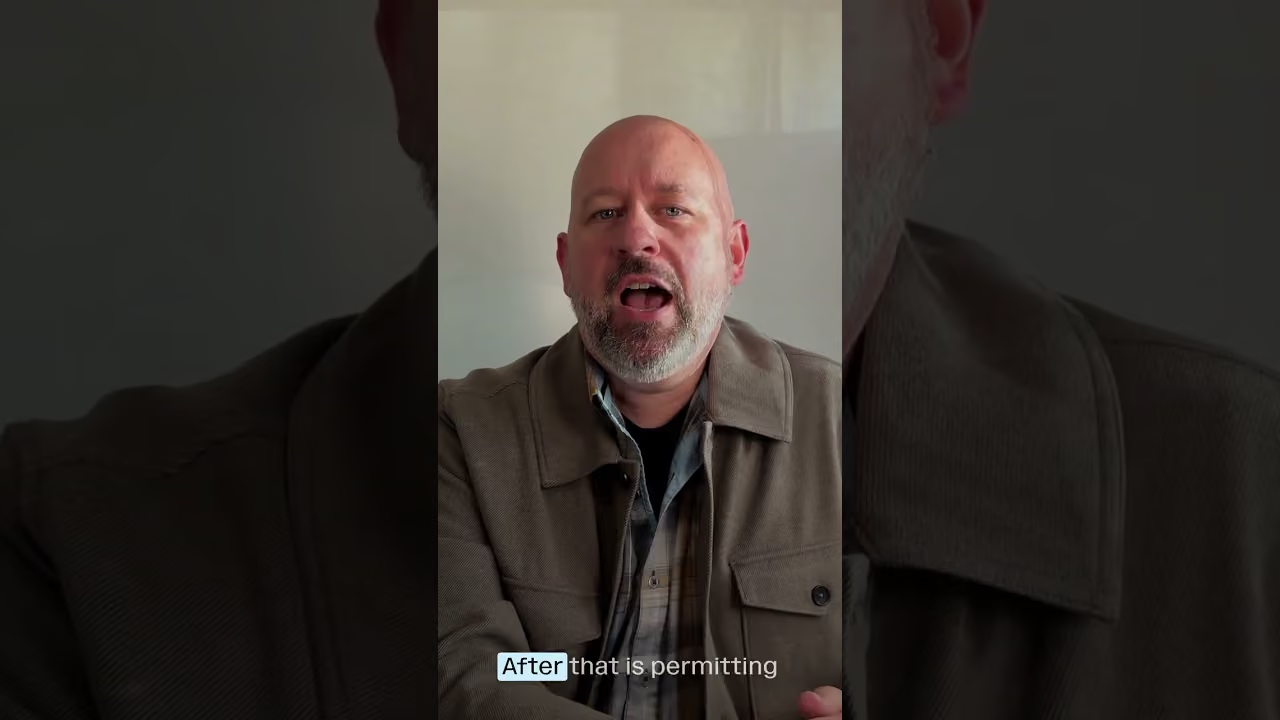
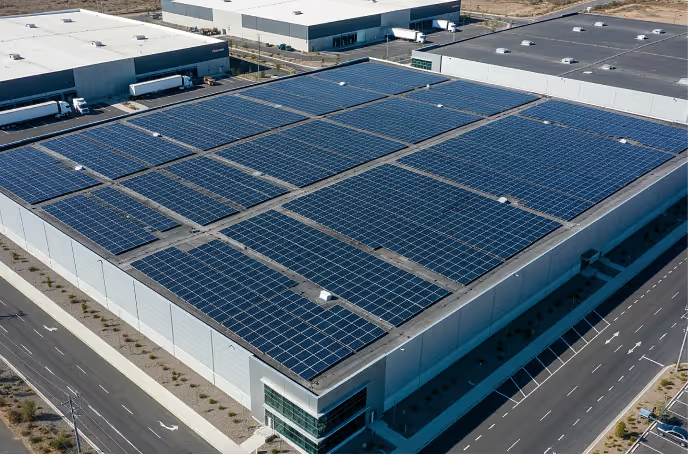
What happens to your roof when solar is installed? In this video, Jared Friesen of Lumen Energy explains how commercial rooftop solar systems are mounted, how your building is protected, and what to expect during installation. Bonus content for CRE owners...insider insight into what can slow down or speed up the process. If you own or manage commercial real estate, understanding how solar impacts your roof—from mounting systems to safety requirements—is key to evaluating whether a project makes sense. What You’ll Learn How solar panels are mounted on flat commercial roofs The difference between ballasted, attached, and hybrid systems How solar systems avoid damaging your roof How layouts preserve access to HVAC and roof equipment What safety and code requirements are involved
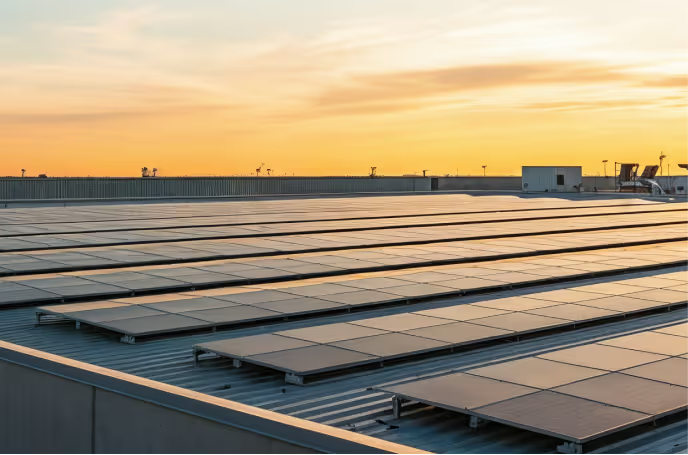
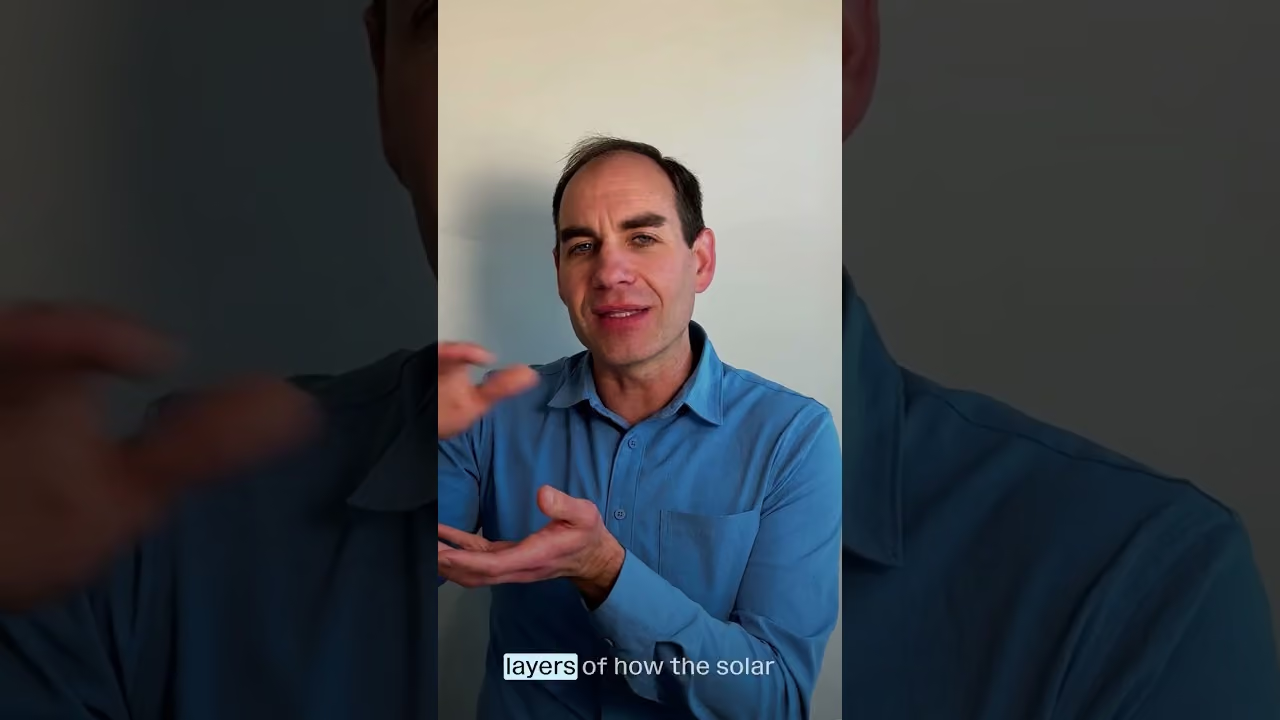
Can you still access your roof after installing solar? In this video, Bart Frischknecht from Lumen Energy explains how roof access works under a solar lease—including maintenance, repairs, and full roof replacement scenarios. What You’ll Learn How roof access works under a solar lease What “lost energy revenue” means How routine maintenance is handled What happens if you need to replace your roof How to structure a solar lease to protect your interests
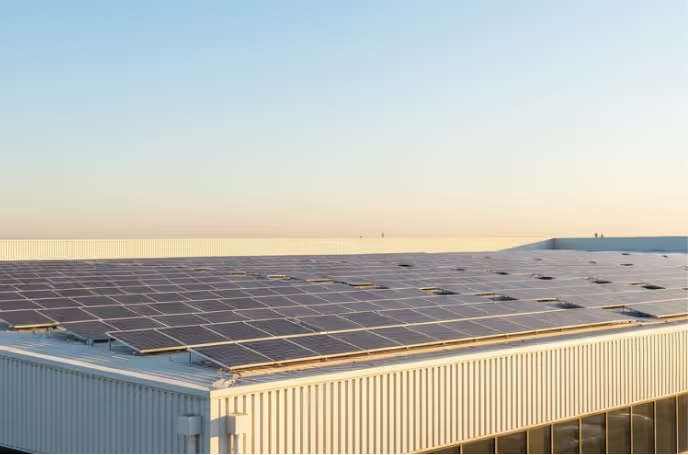
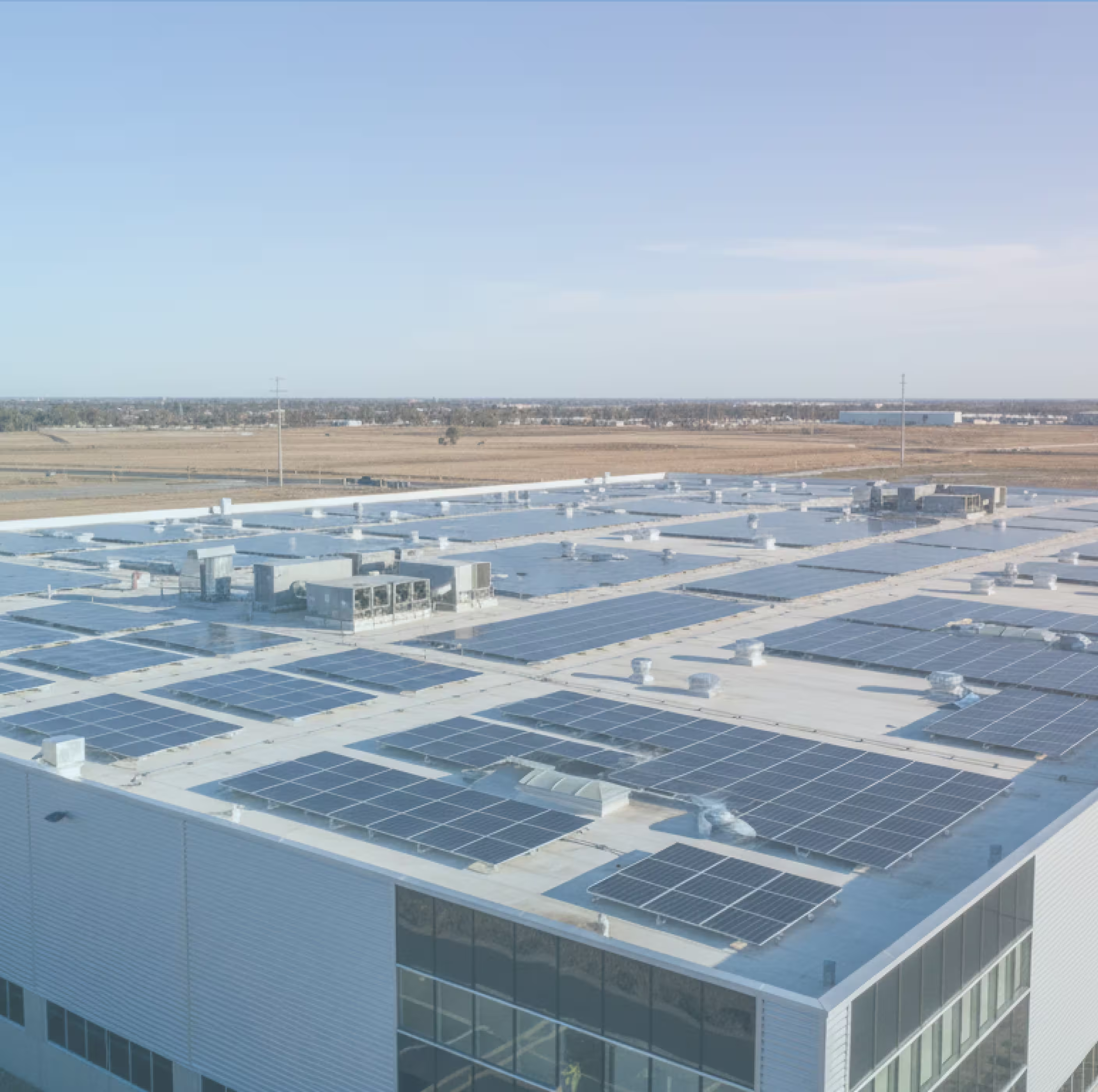
Watershed and Lumen Energy are partnering to make onsite solar a more practical business decision across large, distributed portfolios of buildings, helping companies move from planning to operating projects with predictable power costs and measurable emissions reductions.
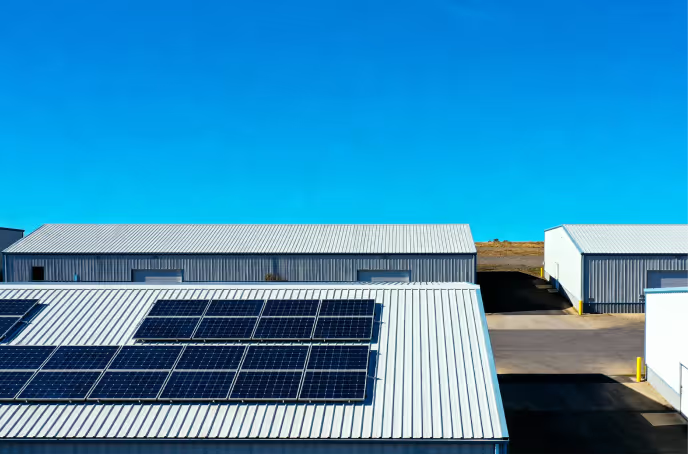
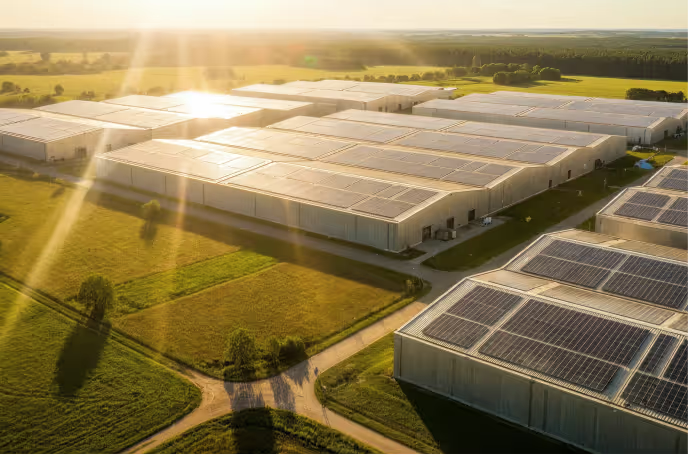
One of the most common questions we hear from asset management teams considering rooftop solar leases is: "What happens after the panels are installed?" It's a smart question—especially when you're managing a portfolio of properties and need clarity on long-term responsibilities, ongoing site access, and what to expect from your solar developer partner. The good news? When you lease your rooftop to a solar developer through a rooftop leasing agreement, the developer takes on virtually all operational responsibilities. Your role is minimal, and the ongoing requirements are clearly defined upfront. Here's what you need to know.
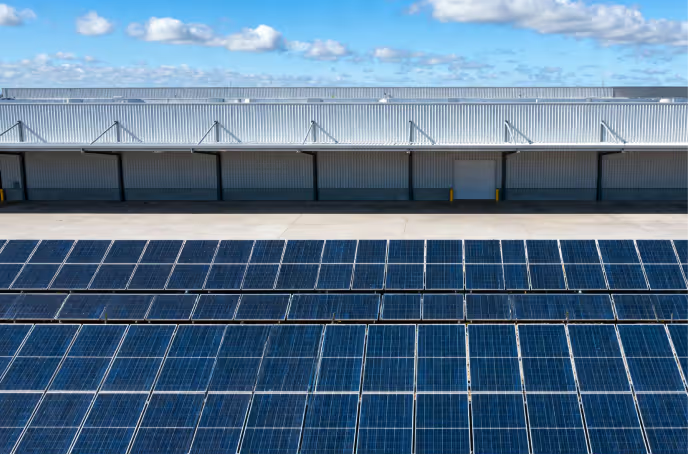
Learn exactly what physical changes solar installations make to commercial roofs, how modern mounting systems work, and how Lumen Energy ensures safety and compliance throughout your rooftop leasing project.
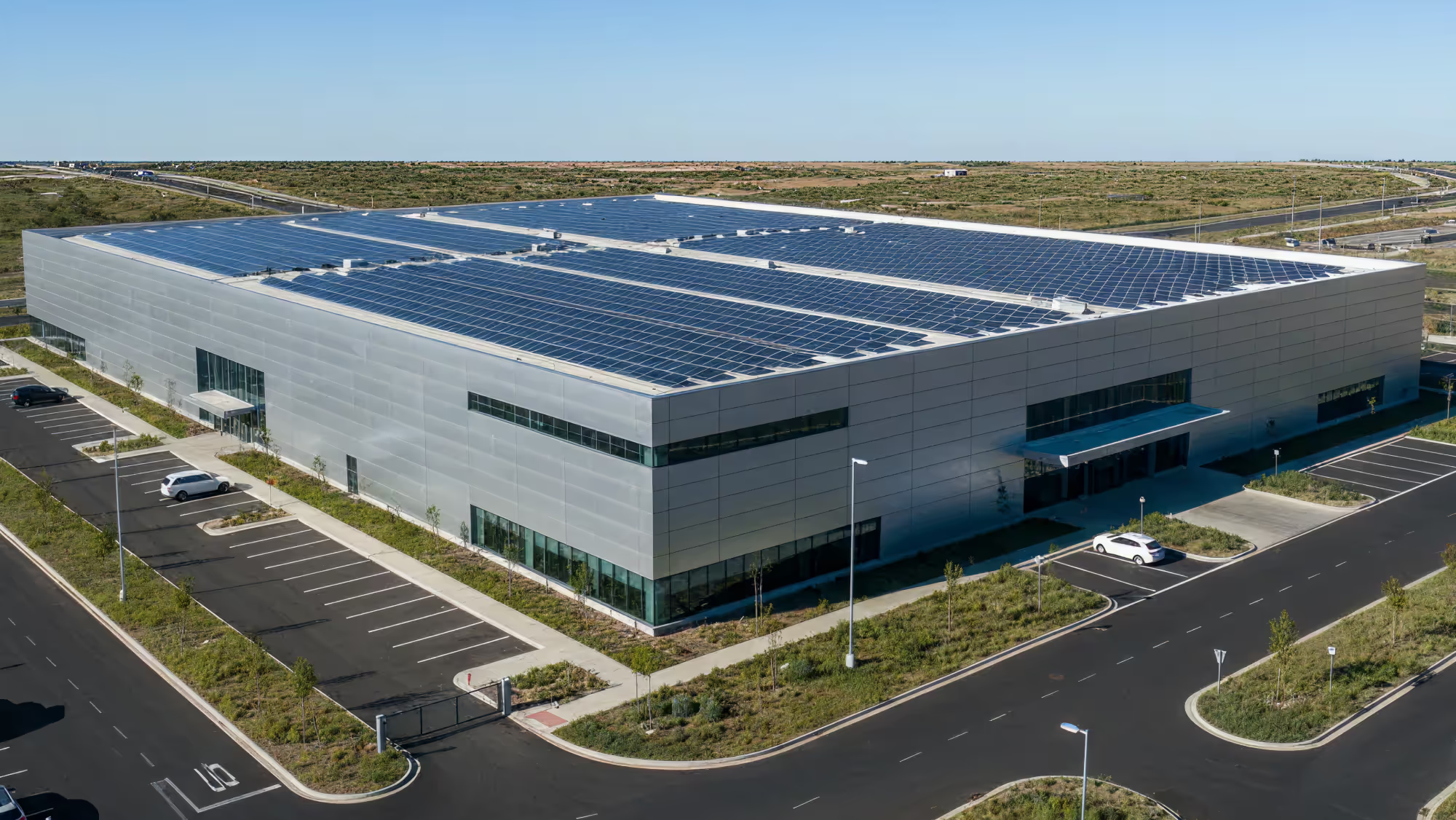

If your building is insured by FM Global, rooftop solar is possible, but only when it meets their rigorous loss prevention standards. From roof assemblies to fire protection and wind uplift, FM’s Data Sheet 1-15 outlines what’s required—and what’s not allowed.
In the latest episode of The Pulse by GRESB, host Reid Morgan sits down with Peter Light, CEO & Co-founder of Lumen Energy, to break down the economic and operational realities of deploying on-site renewables across large commercial property portfolios.

We’ve rolled out two new features to our web app: EV charger optimization for entire portfolios and VNEM deployment in CA. From attending key industry conferences to launching these projects, we’re pushing forward to deliver scalable solutions.
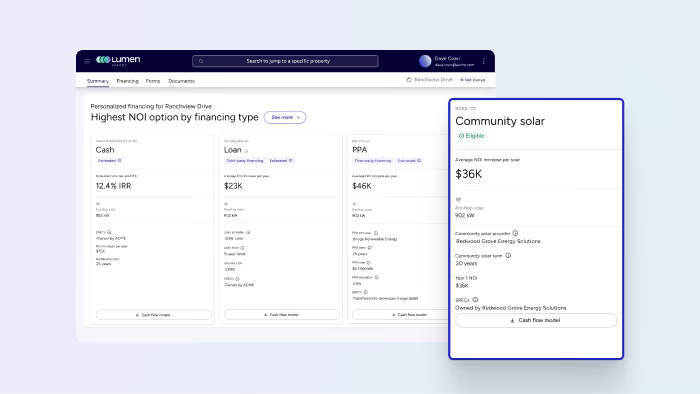

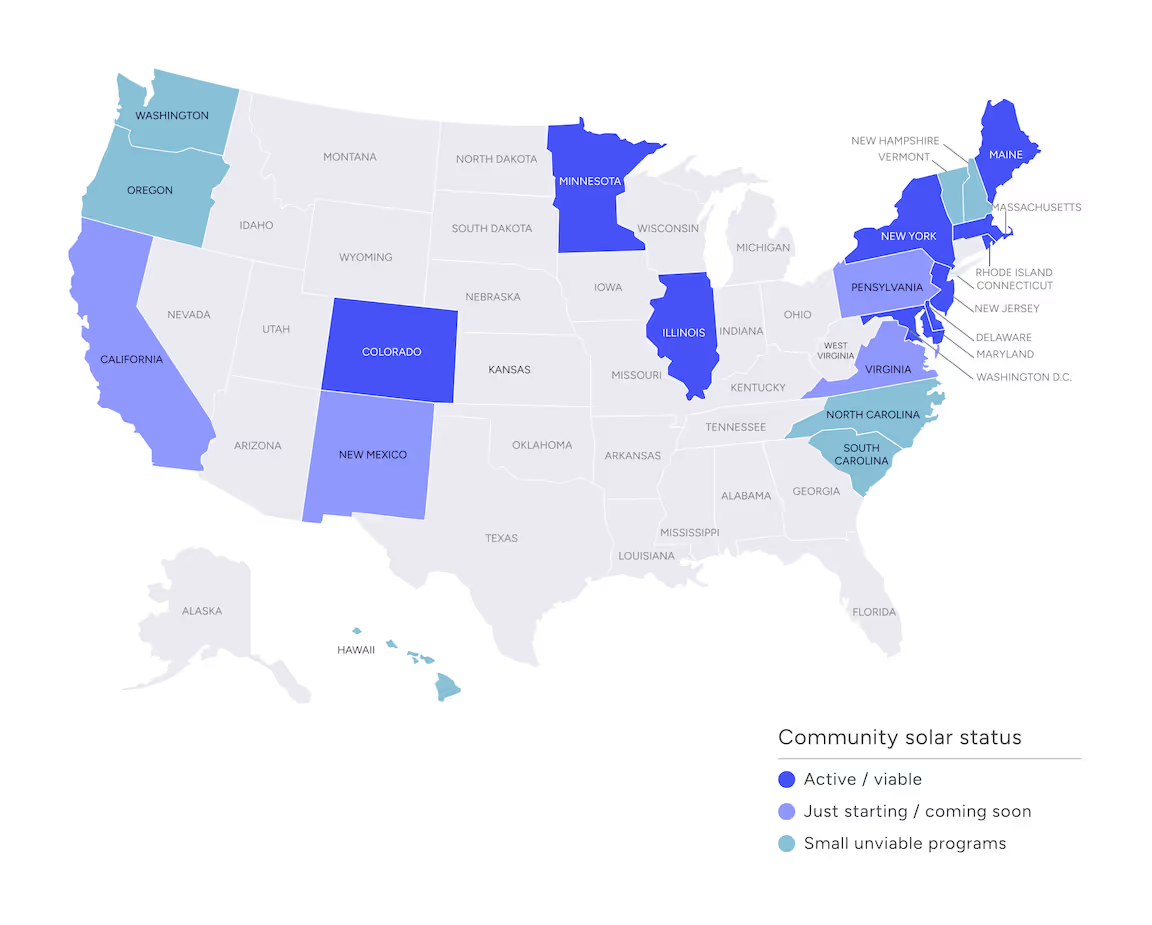
What is community solar, and how can you determine if it might be right for your building?

Are you interested in installing solar, but unsure how it’ll affect the resale value of your commercial property? Every year, more and more businesses are installing solar. New findings have shown that buildings with solar power have increased property values by over 4 percent.
Developing C&I Renewable Infrastructure at scale: a partnership between industry leaders in commercial real estate and renewable energy

Startup Lumen Energy has closed a Series A round of $11 million to expand its new clean energy financing product for commercial building owners, the company tells Axios.
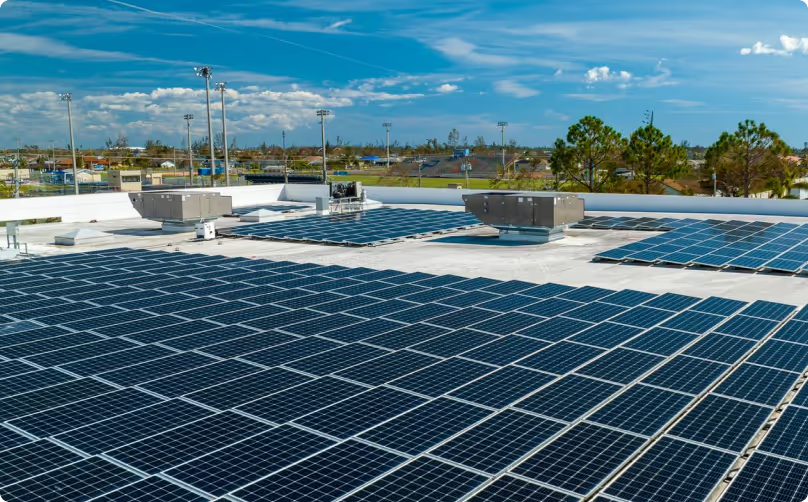
With its Auto PPA tool, building owners and operators can calculate costs and benefits of on-site solar and other clean energy systems and increase net operating income with zero upfront capital.

Today, Lumen Energy unveils the AutoPPA™, a new software product that unlocks hidden income for millions of commercial buildings across the United States. Lumen Energy’s software automatically identifies the optimal clean energy system for each property in a building owner’s portfolio, and delivers a personalized Power Purchase Agreement for every qualifying building. Building owners can get their actionable offers for free at getlumen.com.
Lumen Energy, a pioneer in unlocking profitable ESG initiatives for commercial real estate owners, is proud to announce its addition to Urban Land Institute’s (ULI) Greenprint Innovation Partner Program.
Lumen Energy, a pioneer in unlocking profitable ESG initiatives for commercial real estate owners, is now a Premier Partner with GRESB, the global sustainability benchmark for real estate.

Environmental, Social, Governance, or ESG, is a measurement and reporting standard commonly used by investors to evaluate how responsibly a company earns its profits. The criteria were first introduced in a 2005 study examining the relevance of environmental, social, and governance factors to asset management and financial performance.

In recent years, the focus of organizations has undergone a metamorphosis. Although still driven by the continuous need to achieve greater profitability and expansion, there is now also an undeniable shift towards values and environmental consciousness.ESG (environmental, social and governance) investment strategies have been labeled as ‘investing with a conscience.’ Years ago, ESG strategies were believed to be damaging to a company’s ROI (return on investment), but such an outlook is a misnomer and in reality ESG solutions are proving market-beating.
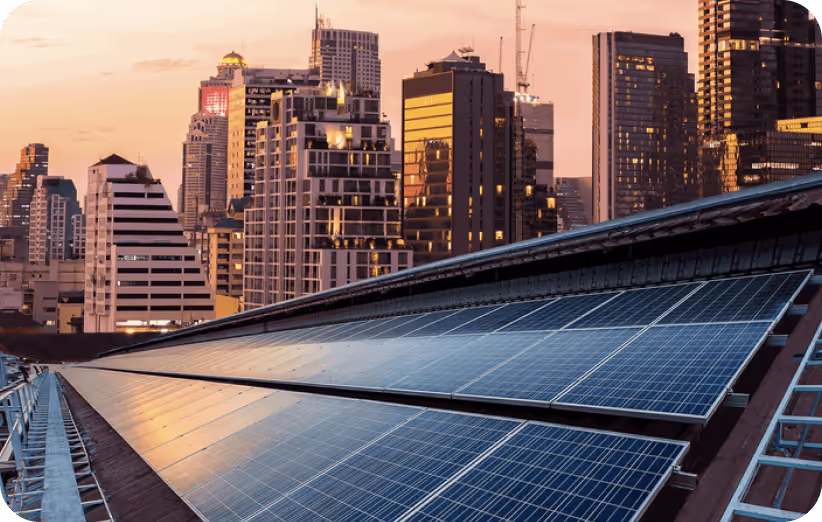
By now, it's become common knowledge that big corporations like the cost savings of solar power. While Apple, Target, and Walmart are frequently cited examples of clean energy adoption, most non-residential solar energy is being generated by municipal utilities and small to mid-sized enterprises.
The adverse effects of over 200 years of human-generated carbon emissions are all around us. From global forest fires and changing weather patterns to melting glaciers and disappearing animal life, the outcome of excess greenhouse gas accumulation is no longer just theoretical predictions. They are upon us.
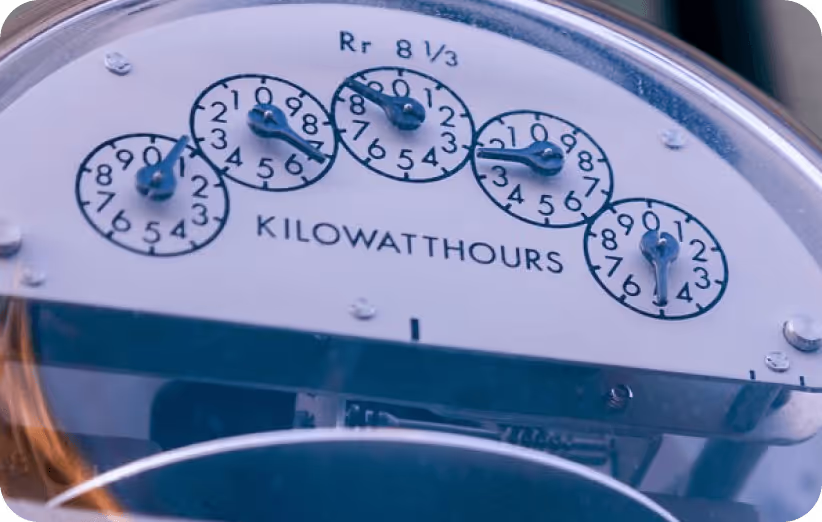
Good decisions start with good data. Chances are, your utility has excellent data about your energy consumption. Most utilities take a meter reading every 15 minutes -- about 35,000 meter readings per year. With the right tools, that data paints a picture of the opportunities for facility-level energy savings. For solar, this data is pure gold because it tells us exactly when solar is making money for you, and how much. With this level of precision, we can fine tune the exact quantity of solar that will generate the best returns and see whether those returns would be enhanced by a battery.
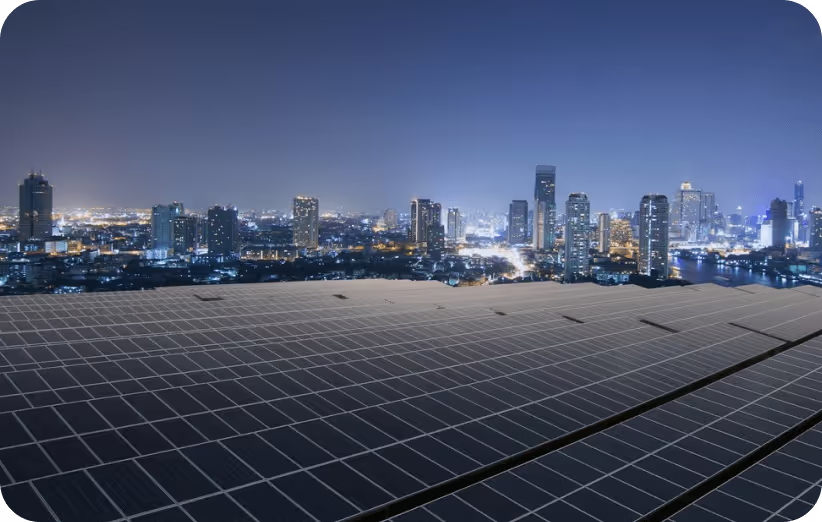
In a quest for clean energy, solar takes center stage. Today’s ambitious clean energy mandates are shaping the electrical grids of tomorrow. Throughout the United States, municipalities, corporations, and utilities are all pushing to break away from the yoke of fossil fuels by advancing efficiency and clean energy. Currently, studies show that one in three people live in a state or city that is dedicated to transitioning to a 100 percent emissions-free, renewable energy.

In a world united against man-made climate change, carbon emissions matter. In 2021, 18% of North American businesses report carbon emissions associated with their products and the B2B focus on the ‘greening’ of supply chains is accelerating. In fact, corporations are serious about their commitment to action, as evidenced by the 300 signatories behind an open letter calling on the US to do more to reduce greenhouse gas emissions. When deciding how to reduce the carbon emissions of your business, how can you make the greatest impact?
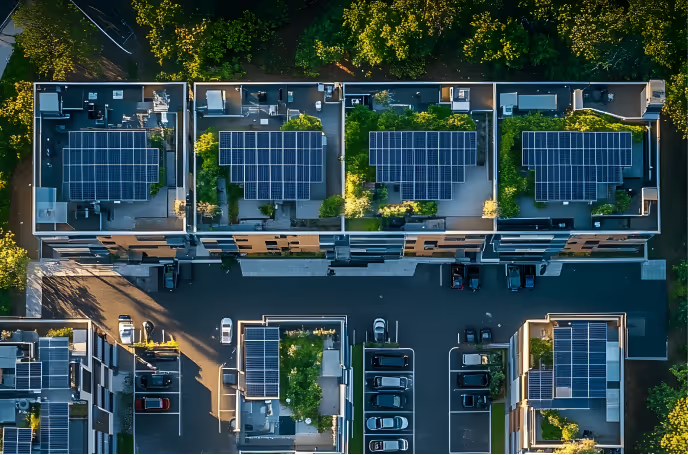
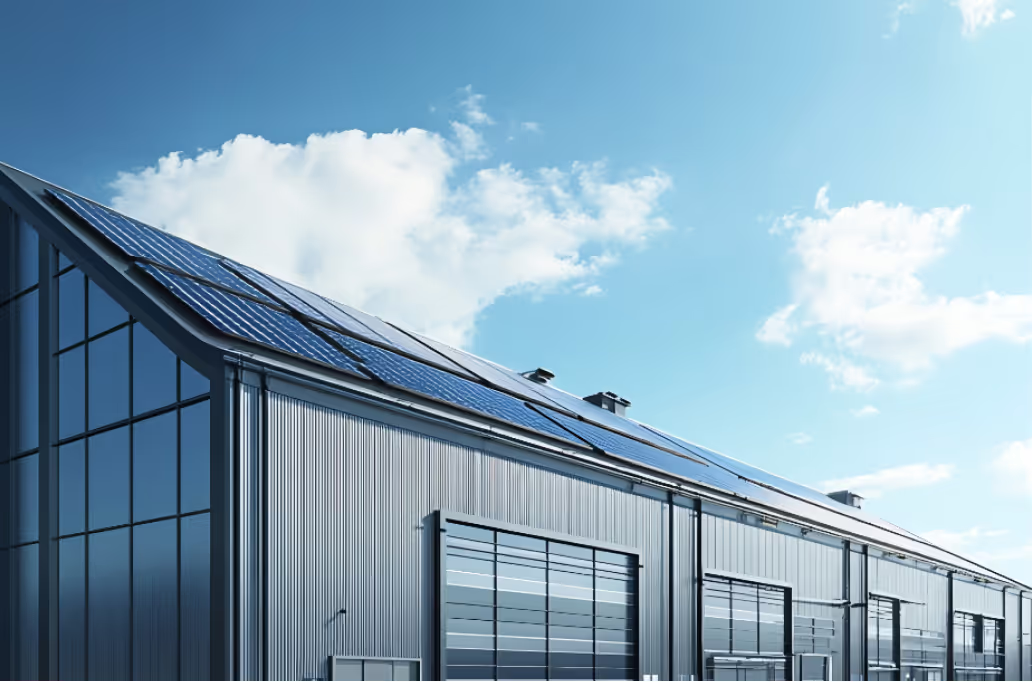

Exploring different financing options for commercial solar: Which one is right for you?

As a property owner or manager, you can leverage this trend to your advantage through the Investment Tax Credit (ITC), a federal incentive that encourages the adoption of solar energy.
.avif)
A Solar Power Purchase Agreement (PPA) is a financial arrangement that enables organizations to benefit from clean energy without incurring the upfront capital expenditure associated with solar power installations.
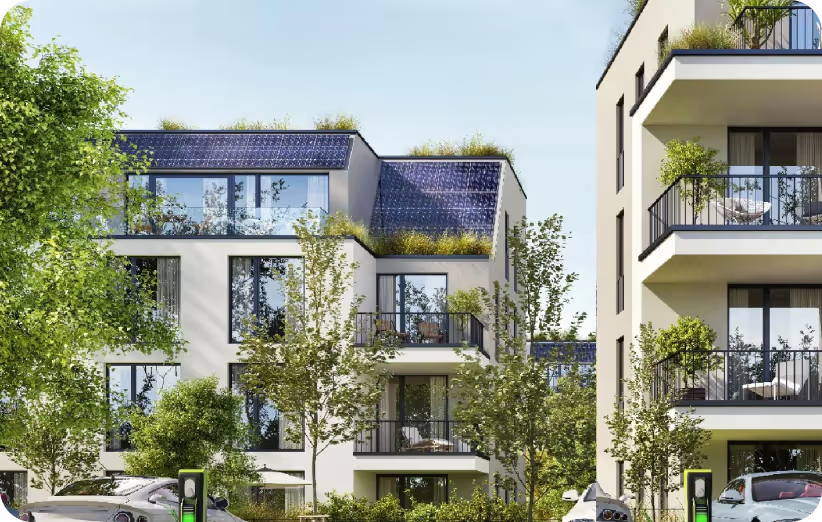
As a company focused on solar projects for commercial real estate owners, we have directly observed the benefits of our platform in kickstarting solar initiatives in collaboration with top EPC partners.

Free evaluation. No commitment. Get started in minutes.